See how your people actually use AI
Find out how AI is being used, how effectively, and what value it creates. For leaders who need to understand, improve, and prove AI’s impact.
See how your people actually use AI
Understand how your organization uses AI, where stronger skills can improve effectiveness, and where AI creates value.
For leaders who need to understand, improve, and prove AI’s impact.
Go beyond usage metrics
One view across every AI tool you pay for, with the context to understand usage, effectiveness, and value.
Built for everyone in the loop
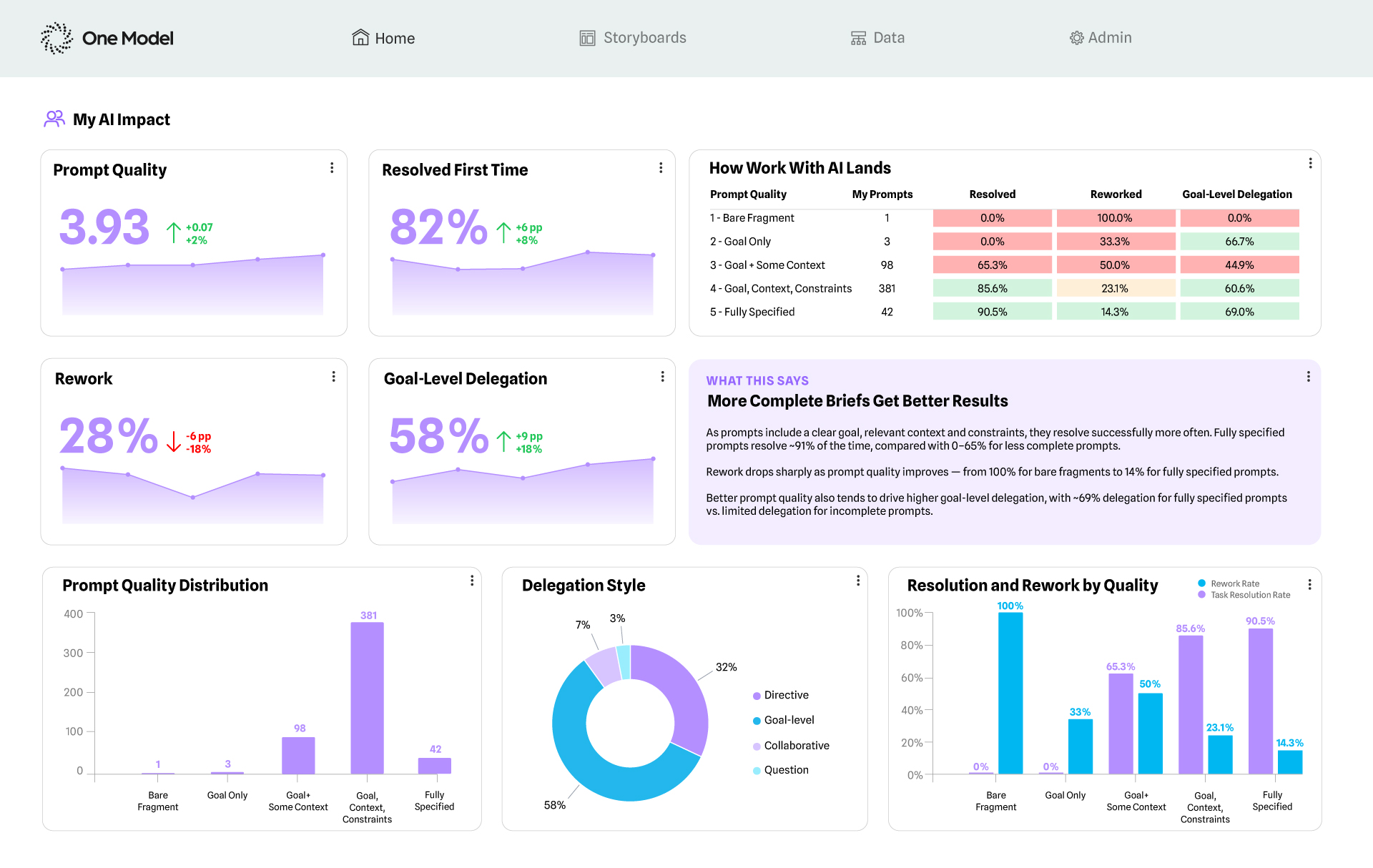
The same intelligence, tailored to what each person needs to understand, improve, and act on.
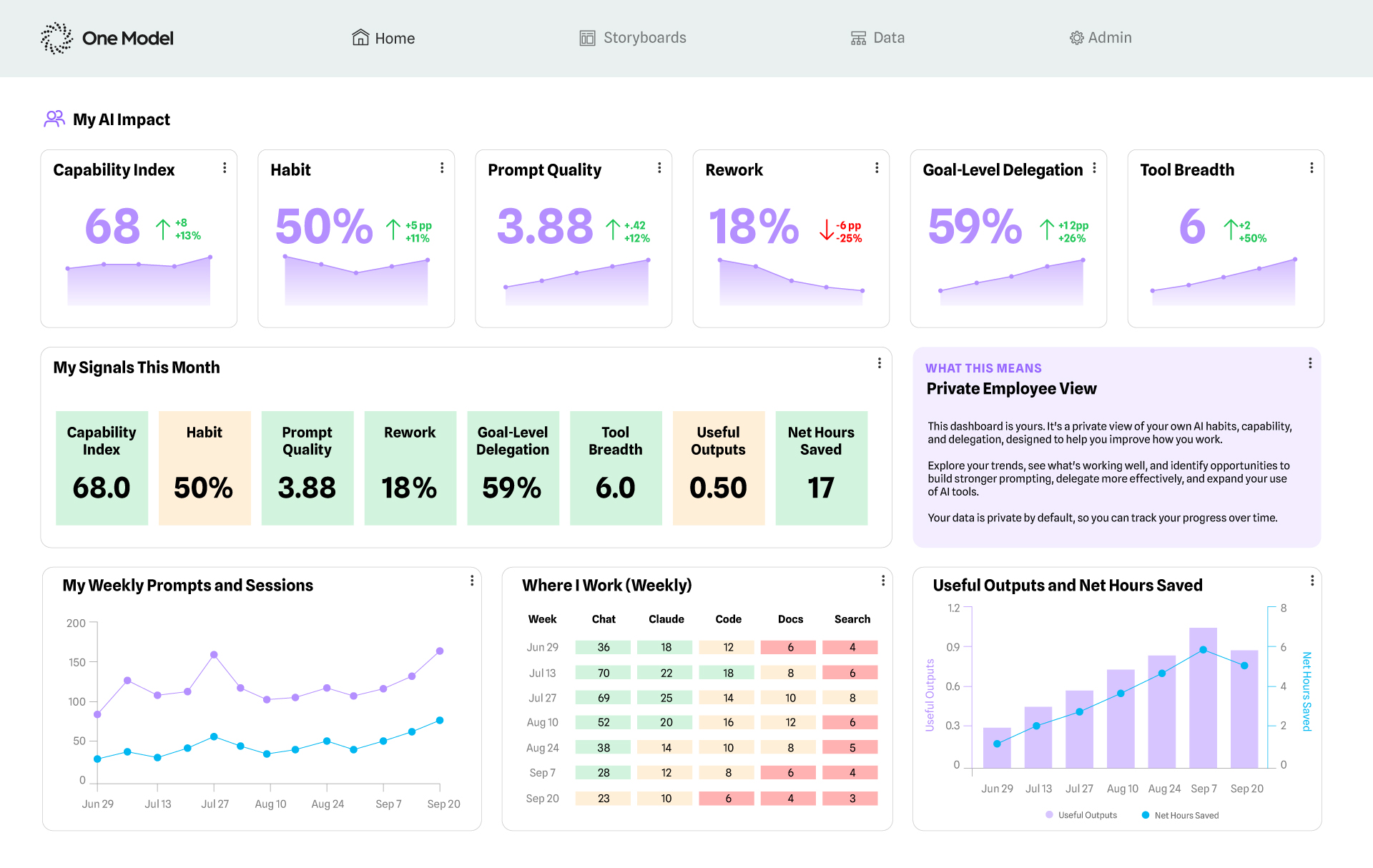
A private view of their own AI patterns, progress, and next steps

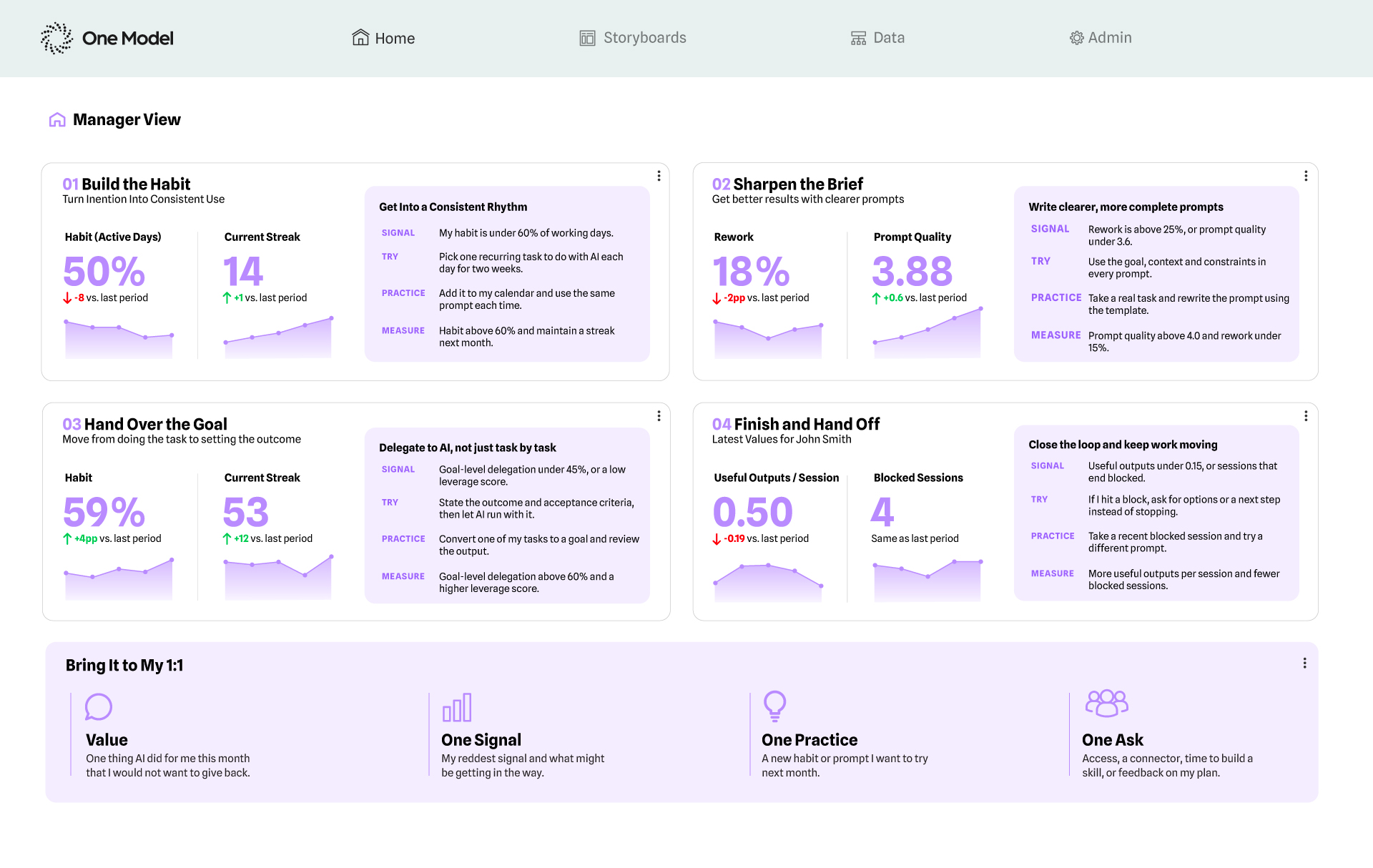
A team view built for coaching, with clear signals and practical plays to help people improve

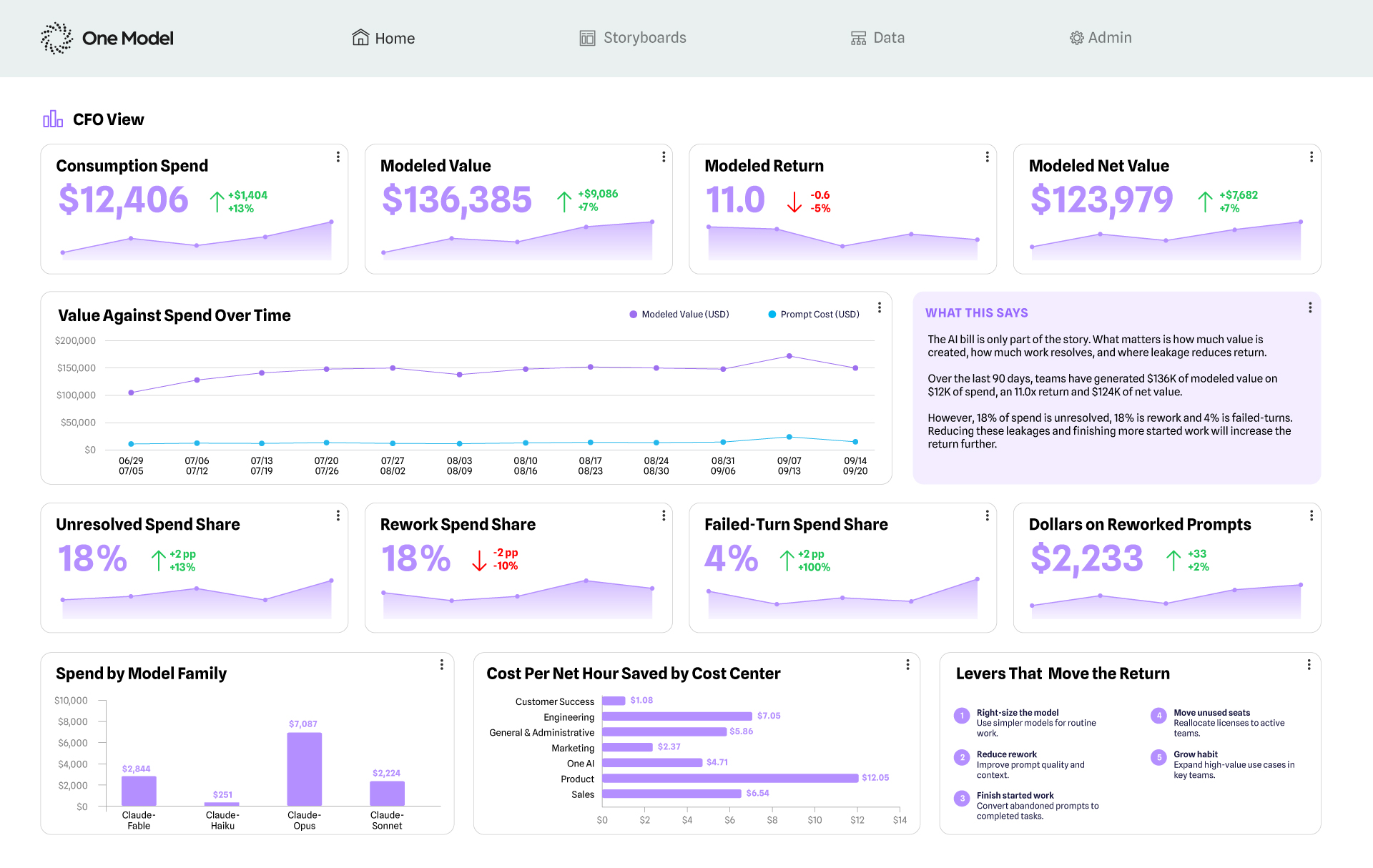
A view of AI spend, tools, capability, governance, and transformation progress
Connect AI effectiveness to business outcomes
Connect AI activity with workforce and operational data to see how stronger AI use relates to productivity, performance, cycle time, output, and the outcomes your business already tracks.
What you can measure now:
• Productivity - hours saved, useful outputs, and work completed
• Capability - prompting, delegation, rework, and resolution
• Leverage - how deeply AI supports tasks and workflows
• Value & ROI - modeled value, return, and where spend leaks
• Coaching - where individuals and teams can improve next
Connect AI effectiveness to business outcomes
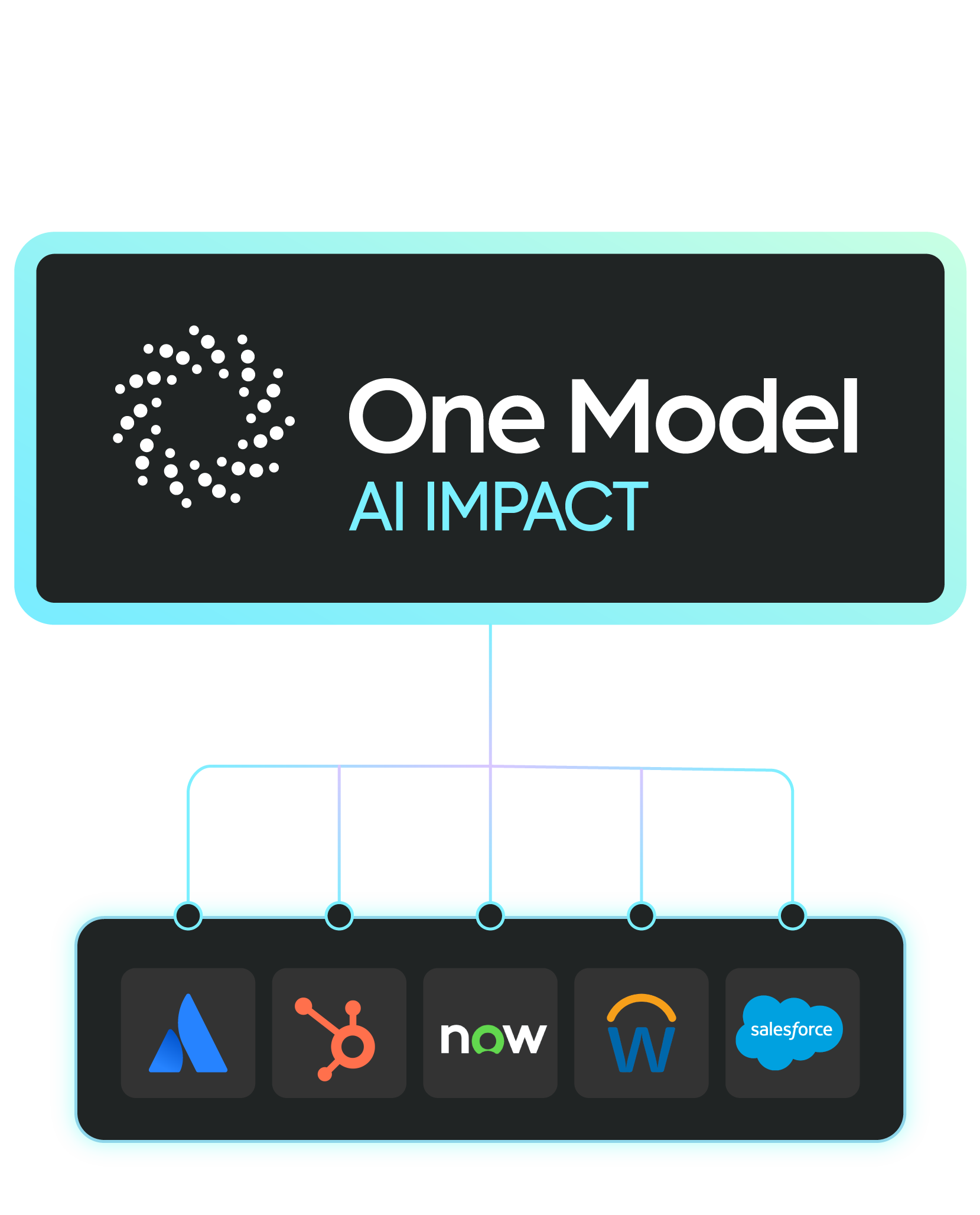
Combine AI activity with workforce and operational data to see how stronger AI use relates to productivity, performance, cycle time, output, and the outcomes your business already tracks.
What you can measure now:
Connect the dots from usage to impact
Governed insights, built for trust
Keep individual insights private while giving managers and leaders the broader patterns they need
Deliver the right insights to employees, managers, and leaders
Set clear boundaries for how AI insights are accessed, shared, and used
Built on a foundation enterprises already trust
AI Impact extends One Model’s proven workforce intelligence foundation to help organizations understand how AI is shaping work, effectiveness, and business outcomes.
More value from data
Turn complex data into clearer insights about effectiveness and value
Faster time to answer
Give leaders insights in minutes with custom dashboards
FAQS
AI Impact helps organizations understand how AI is actually being used across their workforce, where it improves effectiveness and productivity, and where AI investment is creating value. It brings together AI activity, usage, spend, and workforce context in one governed view.
AI vendor dashboards provide useful visibility into users, licenses, tokens, and spend. AI Impact brings activity from multiple AI tools together and analyzes prompt content and business data within the workforce context so organizations can understand how AI is being used, how effectively teams are using it, and where value is being created.
AI Impact helps organizations understand the work AI supports, how usage differs across teams, and how it’s being used. It shows what workflows, skills, and connectors are improving productivity and where managers can help employees be more effective with AI.
AI Impact is designed for everyone involved in how AI is adopted, managed, and improved across the workforce. Employees can better understand their own AI habits, managers can identify patterns and opportunities for coaching or stronger workflows, and leaders such as CIOs, CFOs, CHROs, AI transformation leaders, HR leaders, and People Analytics teams can understand adoption, effectiveness, and where AI investment is creating value.
Yes. AI Impact can be paired with One Model Workforce Intelligence to connect AI activity with broader workforce data and understand how AI usage relates to productivity, performance, hiring, engagement, retention, and other workforce outcomes.
AI Impact estimates the time AI saves on completed work, then converts those hours into modeled dollar value using an organization’s labor costs. Because time saved cannot be measured directly, the results are clearly labeled as modeled estimates.
Yes. AI Impact is designed to provide an integrated view of AI activity across OpenAI, Anthropic, Microsoft, Gemini, xAI, Glean, and custom systems.
AI Impact uses the best available data integration for each AI platform. Depending on the provider and customer configuration, that can include APIs, telemetry feeds, Microsoft Graph, and data lake sources.
AI Impact does not depend on a single reporting API. One Model evaluates the available integration points for each platform and uses the best source available. The level of detail available will vary by provider and configuration, One Model monitors those capabilities as they evolve.
AI Impact combines AI activity with basic workforce context, such as employee, manager, role, function, and cost center. Organizations can also add HR, performance, financial, or operational data to deepen the analysis and connect AI usage to broader outcomes.
AI Impact uses a standardized taxonomy to classify prompt content, usage activity, system events, and process outcomes. Validation is built into the classification process to support consistency and accuracy, while the taxonomy continues to evolve as AI use cases and vendor capabilities change.
Yes. Customers can analyze AI Impact data through One Model’s embedded AI capabilities, and governed data can also be made available to other Enterprise AI tools via MCP. This gives users flexibility to explore insights in One Model or in the AI tools they already use.
Yes. In addition to supported enterprise AI platforms, AI Impact can incorporate custom systems when the necessary usage data can be made available.
AI Impact can reflect an organization’s actual cost structure, including usage-based pricing, negotiated rates, subscriptions, bundled licenses, or internal costing models rather than relying only on generic assumptions.
Yes. AI Impact data can be analyzed through One Model’s AI capabilities and can also be made available through governed enterprise AI experiences, allowing users to access insights in the tools they already use.
AI Impact gives organizations control over how prompt-level intelligence is analyzed and accessed. Prompt content reporting can be enabled or disabled based on company policies, while role-based access controls determine what different users can see. For example, managers may only see aggregated insights for their teams, while authorized Security, Privacy, or Governance leaders can be given more detailed access when appropriate. Employees can also access their own insights to better understand and improve how they use AI.
AI Impact builds on One Model’s established security foundation, including ISO 27001:2022 and SOC 2 Type II certifications, helping organizations analyze sensitive AI activity within an enterprise-grade, governed environment.
No. AI Impact is not an employee monitoring tool. It is designed to understand AI adoption, activity, and effectiveness. While prompt content is required for classification and impact analysis, organizations control the level of visibility available to different users.
AI Impact can be configured to exclude data for employees in certain locations when required by an organization’s privacy policies or applicable regulations. This gives organizations greater control over how AI activity data is collected and analyzed. AI Impact also builds on One Model’s established privacy and security practices, including adherence to GDPR Data Processor requirements.
Yes. AI Impact can be deployed across the enterprise or for a specific team, function, or population. Organizations can start with the AI users they want to understand today, then expand over time as their needs grow.
AI Impact is designed for fast deployment. Timing depends on the number of AI systems being connected and the availability of the necessary data and permissions. The solution can use APIs, telemetry, and other available data sources depending on the AI platform.
AI Impact helps organizations understand how AI is actually being used across their workforce, where it improves effectiveness and productivity, and where AI investment is creating value. It brings together AI activity, usage, spend, and workforce context in one governed view.
AI vendor dashboards provide useful visibility into users, licenses, tokens, and spend. AI Impact brings activity from multiple AI tools together and analyzes prompt content and business data within the workforce context so organizations can understand how AI is being used, how effectively teams are using it, and where value is being created.
AI Impact helps organizations understand the work AI supports, how usage differs across teams, and how it’s being used. It shows what workflows, skills, and connectors are improving productivity and where managers can help employees be more effective with AI.
AI Impact is designed for everyone involved in how AI is adopted, managed, and improved across the workforce. Employees can better understand their own AI habits, managers can identify patterns and opportunities for coaching or stronger workflows, and leaders such as CIOs, CFOs, CHROs, AI transformation leaders, HR leaders, and People Analytics teams can understand adoption, effectiveness, and where AI investment is creating value.
Yes. AI Impact can be paired with One Model Workforce Intelligence to connect AI activity with broader workforce data and understand how AI usage relates to productivity, performance, hiring, engagement, retention, and other workforce outcomes.
AI Impact estimates the time AI saves on completed work, then converts those hours into modeled dollar value using an organization’s labor costs. Because time saved cannot be measured directly, the results are clearly labeled as modeled estimates.
Yes. AI Impact is designed to provide an integrated view of AI activity across OpenAI, Anthropic, Microsoft, Gemini, xAI, Glean, and custom systems.
AI Impact uses the best available data integration for each AI platform. Depending on the provider and customer configuration, that can include APIs, telemetry feeds, Microsoft Graph, and data lake sources.
AI Impact does not depend on a single reporting API. One Model evaluates the available integration points for each platform and uses the best source available. The level of detail available will vary by provider and configuration, One Model monitors those capabilities as they evolve.
AI Impact combines AI activity with basic workforce context, such as employee, manager, role, function, and cost center. Organizations can also add HR, performance, financial, or operational data to deepen the analysis and connect AI usage to broader outcomes.
AI Impact uses a standardized taxonomy to classify prompt content, usage activity, system events, and process outcomes. Validation is built into the classification process to support consistency and accuracy, while the taxonomy continues to evolve as AI use cases and vendor capabilities change.
Yes. Customers can analyze AI Impact data through One Model’s embedded AI capabilities, and governed data can also be made available to other Enterprise AI tools via MCP. This gives users flexibility to explore insights in One Model or in the AI tools they already use.
Yes. In addition to supported enterprise AI platforms, AI Impact can incorporate custom systems when the necessary usage data can be made available.
AI Impact can reflect an organization’s actual cost structure, including usage-based pricing, negotiated rates, subscriptions, bundled licenses, or internal costing models rather than relying only on generic assumptions.
Yes. AI Impact data can be analyzed through One Model’s AI capabilities and can also be made available through governed enterprise AI experiences, allowing users to access insights in the tools they already use.
AI Impact gives organizations control over how prompt-level intelligence is analyzed and accessed. Prompt content reporting can be enabled or disabled based on company policies, while role-based access controls determine what different users can see. For example, managers may only see aggregated insights for their teams, while authorized Security, Privacy, or Governance leaders can be given more detailed access when appropriate. Employees can also access their own insights to better understand and improve how they use AI.
AI Impact builds on One Model’s established security foundation, including ISO 27001:2022 and SOC 2 Type II certifications, helping organizations analyze sensitive AI activity within an enterprise-grade, governed environment.
No. AI Impact is not an employee monitoring tool. It is designed to understand AI adoption, activity, and effectiveness. While prompt content is required for classification and impact analysis, organizations control the level of visibility available to different users.
AI Impact can be configured to exclude data for employees in certain locations when required by an organization’s privacy policies or applicable regulations. This gives organizations greater control over how AI activity data is collected and analyzed. AI Impact also builds on One Model’s established privacy and security practices, including adherence to GDPR Data Processor requirements.
Yes. AI Impact can be deployed across the enterprise or for a specific team, function, or population. Organizations can start with the AI users they want to understand today, then expand over time as their needs grow.
AI Impact is designed for fast deployment. Timing depends on the number of AI systems being connected and the availability of the necessary data and permissions. The solution can use APIs, telemetry, and other available data sources depending on the AI platform.