


 Overview
 One AI
 Data Mesh
 One AI Assistant
 Data Stories
 Enterprise AI
 One AI Data Intelligence


 Overview

 Employee Engagement
 Talent Retention
 HR Dashboards
 Succession Planning
 Talent Acquisition
 Workforce Analytics
 Case Studies
 Whitepapers
 Blog
 Events & Webinars
 Product Innovation Blog
 Roles in People Analytics
 Contact Us
 Partners
 About Us
 Careers
 News
 Why One Model

A good salesperson's deck used to be part of how they showed they were good at their job. In four months at One Model, most of the work of building one moved to an agent.
The AI-operated share of the skill behind preparing presentation material went from 11% in July to 48% in October. Using presentation software went from 18% to 59%, and graphic design from 17% to 56%. Putting together sales pitch material (preparing it, not standing up and delivering it) went from 9% to 56%. Keeping records of customer interactions went from 8% to 45%.
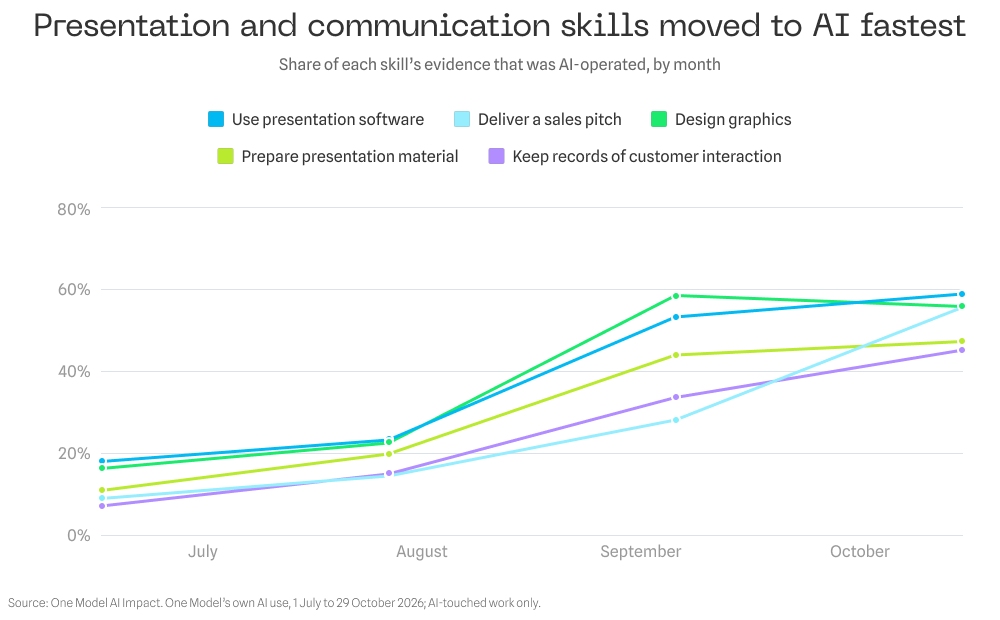
Figure 4.1: AI-operated share of evidence for the skills that moved fastest, by month.
I don't think that makes those skills less important. Someone still has to know what a good deck looks like and catch the slide that's wrong. But it changes what being good at the job means, and I don't think most skills frameworks have caught up.
Skills evidence from real work
Most skills strategies rest on what people say they can do and what their job description says they should be able to do. Both are slow to change and neither shows what people actually do.
We use a different source. Every activity in the work our people do through AI maps to the skills it draws on in ESCO and O*NET. When the task was run by AI and the AI produced the output, that piece of skill evidence counts as AI-operated. Otherwise it counts as the person's. From July to October that produced evidence for 371 skills, 258 of them with enough evidence in both halves of the period to compare.
Across all of it, the AI-operated share rose from 39% in July to 43% in October. One hundred eighty-seven of those 258 skills moved towards AI. The number where AI does most of the operating went from 32 to 55.
Programming, where most people expect the change, looks different. It was already majority AI-operated in July and did not rise over the period; if anything it fell back in October. In our company the change in engineering happened before this period began. The change now is in communication and presentation work.
What stayed with people
Accounting processes, payroll, ERP systems, marketing analytics, and online advertising were all under 6% AI-operated in September and October. Marketing analytics is the clearest case. The amount of evidence for it doubled between the two periods, so people were doing more of it with AI's help, but the AI was operating almost none of it.
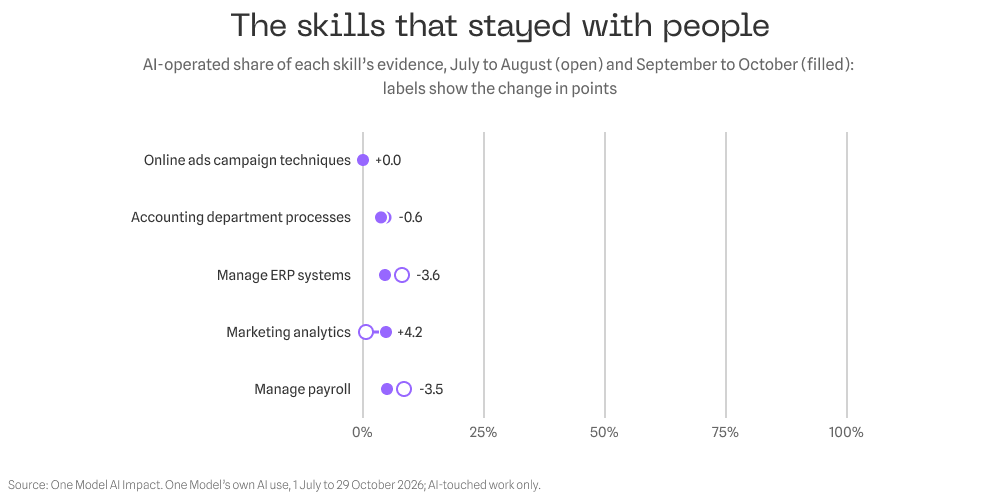
Figure 4.2: The skills that stayed with people, on a scale to 100%.
Some of that is judgement. The person knows the business, the numbers and what happens if they're wrong. Some of it is access: the agents can't act in those systems, so the AI advises and the person does the work. I expect the second explanation covers more than people assume, and that some of these skills will move quickly once the systems are connected. That's worth knowing before you call a skill safe.
Making less, checking more
Across our typed work, review, testing and analysis rose from 30% of activity to 33%. Research and looking things up fell from 12% to 10%. Building, changing, fixing and writing held at about 37%. The share of output people produced themselves fell from 24% to 21%.
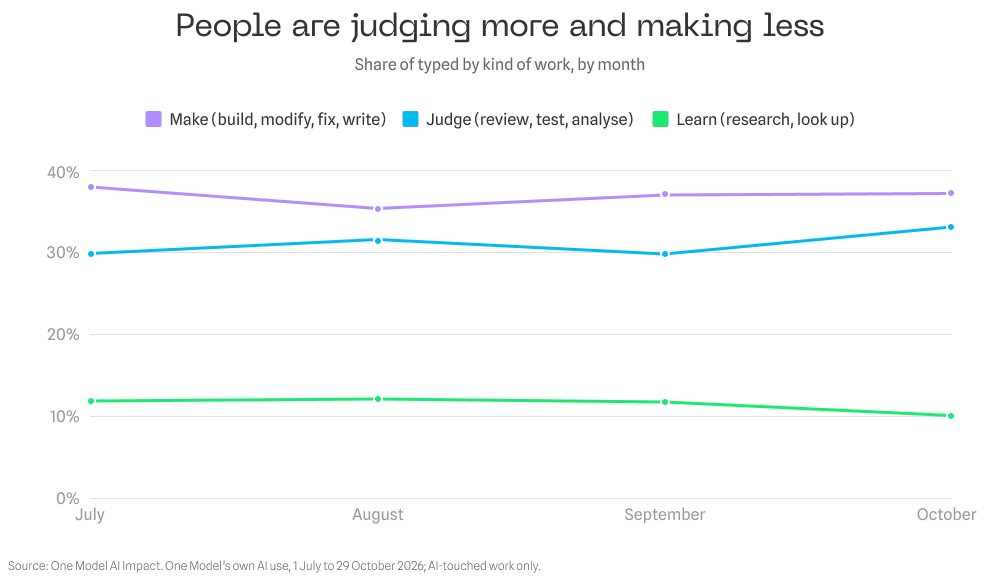
Figure 4.3: Share of typed activity by kind of work, by month.
Four months is too short to call that a trend, but the direction fits everything else we see. People set the goal, the AI produces, and the person checks.
Does handing work to AI narrow people's skillsets?
A common worry is that the more people lean on AI, the narrower their work and skills become. We didn't see that.
We split every person-month with at least ten typed tasks into five groups by how much of that person's work was run by AI. The least AI-run group evidenced about 61 skills a month. The middle group showed 115, the fourth 121 and the most AI-run group 111. So it rises, then levels off at the top. Distinct activities followed the same shape.
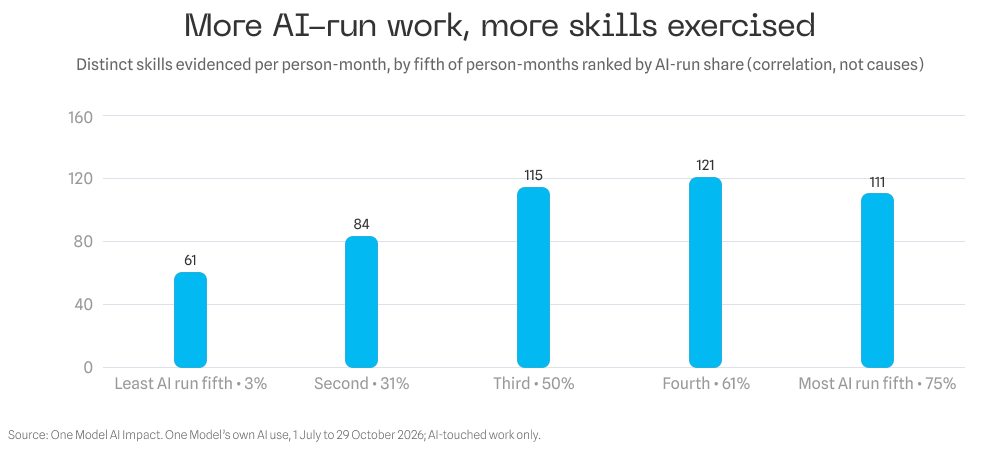
Figure 4.4: Distinct skills evidenced per person-month, by fifth of person-months ranked by AI-run share.
I can't call that cause and effect. Our heaviest AI users are mostly engineers, and people who do more work show more skills. What I can say is that in our company, the people handing the most to AI are not the ones with the narrowest work.
The question I'd put to any leadership team
Much of the work moving fastest to AI (decks, drafts, first versions of an analysis) is how junior people have always learned a trade. If an agent does that work, the learning has to come from somewhere else, whether that's reviewing the AI's output with someone experienced or doing some of it by hand on purpose. I don't have data on this yet. If you are planning a graduate intake for 2027, it's the question I'd want answered first.
The skills evidence in this post comes from One Model's AI Impact product, which links the work going through your AI tools to ESCO and O*NET skills and shows, month by month, which skills are being operated by AI and which by your people.
Want to see it for your own workforce? Let's talk.
